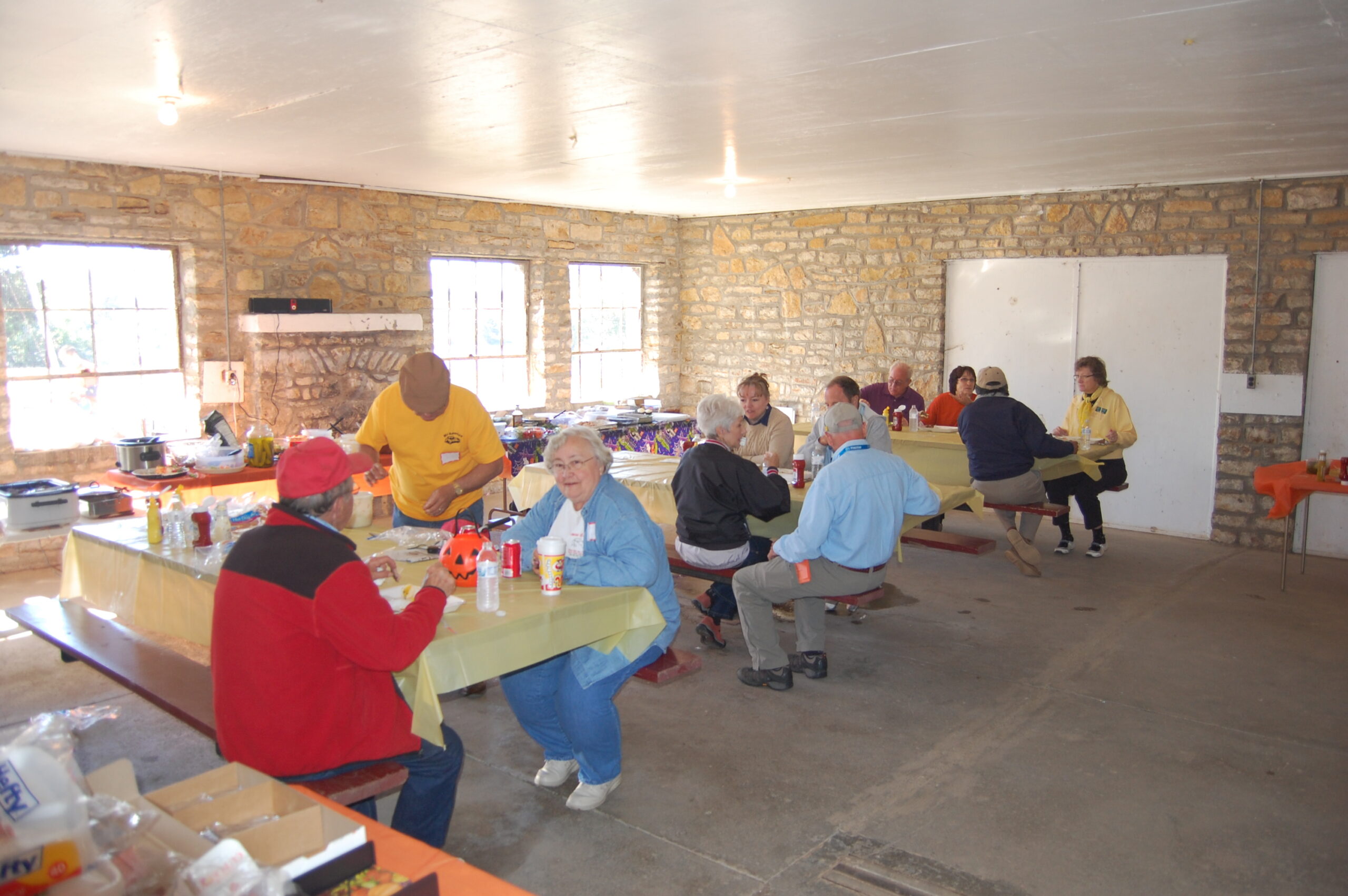
Between January and October 2014, the committee did something remarkable. Working entirely as volunteers, with no budget to speak of and no template to follow, they built an event from scratch. It was frantic. Every week brought new problems, new decisions, and new things nobody had thought of yet. Nobody was getting paid. Nobody stopped.
Darren incorporated the organization as Lake Garnett Grand Prix Revival Incorporated, structured as a 501(c)(4) non-profit social welfare organization – specifically qualified as an entity that holds an annual festival of regional customs and traditions. The legal documents were drafted by a friend of Darren’s, free of charge, as a contribution to the cause. They are still in use today. He navigated the insurance challenge personally – two carriers walked away from the bidding process before it even started, put off by the realities of a public park, open water, no permanent barriers, and cars running at speed. The solution was a three-layer approach: the corporation provided limited liability protection, the Volunteer Protection Act covered every person working the event, and every participant and spectator signed a liability waiver.
CB liaised directly with the City of Garnett throughout – making sure everything the committee was doing had the city’s support and that there would be no last-minute complications from the people who owned the park. That relationship was essential, and CB maintained it with the same steady hand he brought to everything else.
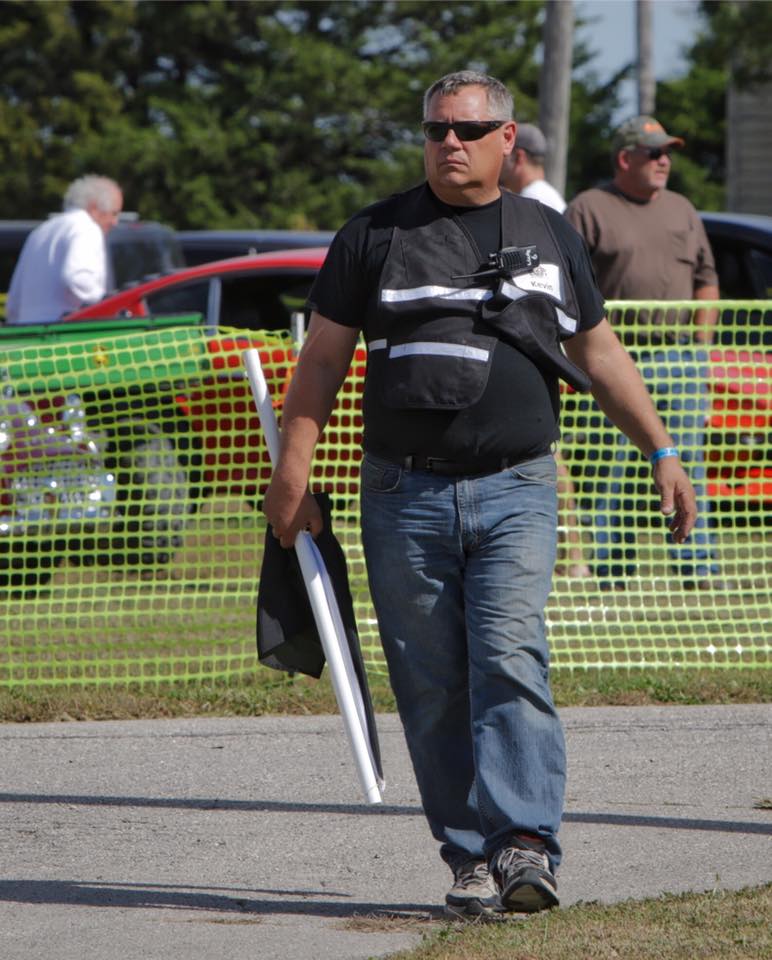
Kevin Hinckle took on the track with a thoroughness that set the standard for everything else. He mapped and secured the safety zones around the entire 2.8-mile circuit, identified and positioned the corner workers at every key point on the course, and built the operational framework that would keep cars and people safe on a public road with no permanent barriers. What Kevin did was not glamorous. It was fundamental. The track ran because Kevin made it run.
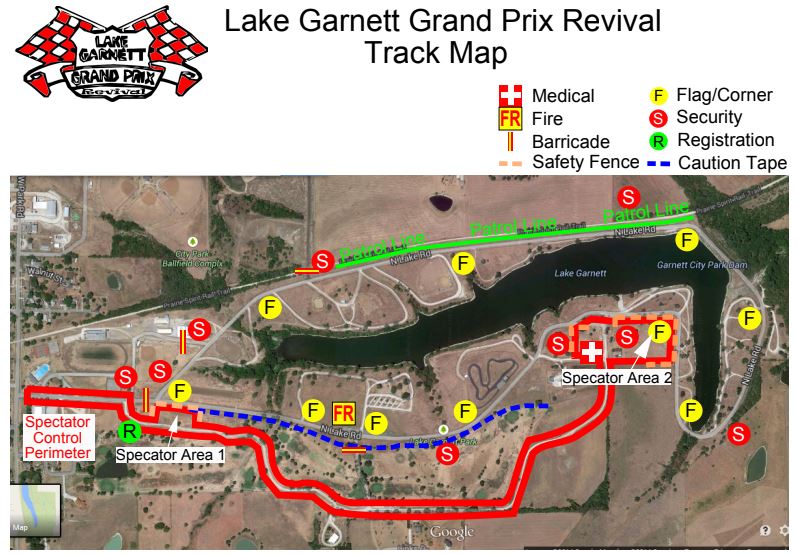
The track was divided into four groups – A through D – defined by speed: under 60, under 80, under 100, and under 120 mph. In a world away from the anything-goes spirit of 2013, helmets were now mandatory. A drivers’ meeting was held before the first car went out, and every participant understood the meaning of the flags, the location of the passing zones – defined only in areas where it was safe to do so – and the rules of the road they were about to share at speed. Self-tech inspection forms had to be completed and submitted. Speed limits were posted on the straights of the track. The event was never classified as a race. But it was run like one.
Rick Van Tuyl designed a custom autocross circuit from scratch for the inaugural event, solving the constraints of the available space at the Garnett high school to deliver a competitive route. From year two onward the event moved to the Garnett airport, where Rick has run it with the same dedication ever since. He has never missed an event. Over thirteen years he has grown into a dual role as autocross organizer and Pit Marshall, and the quality of both reflects a man who simply refuses to do anything less than his best.
Tracy Modlin, through his own connections, sourced thousands of yards of orange safety fencing and cones to define the circuit boundaries and spectator areas. He worked with the city to arrange additional services, and managed security across the entire site – ensuring that the flow of people, cars, and activity stayed organized and safe throughout the day.
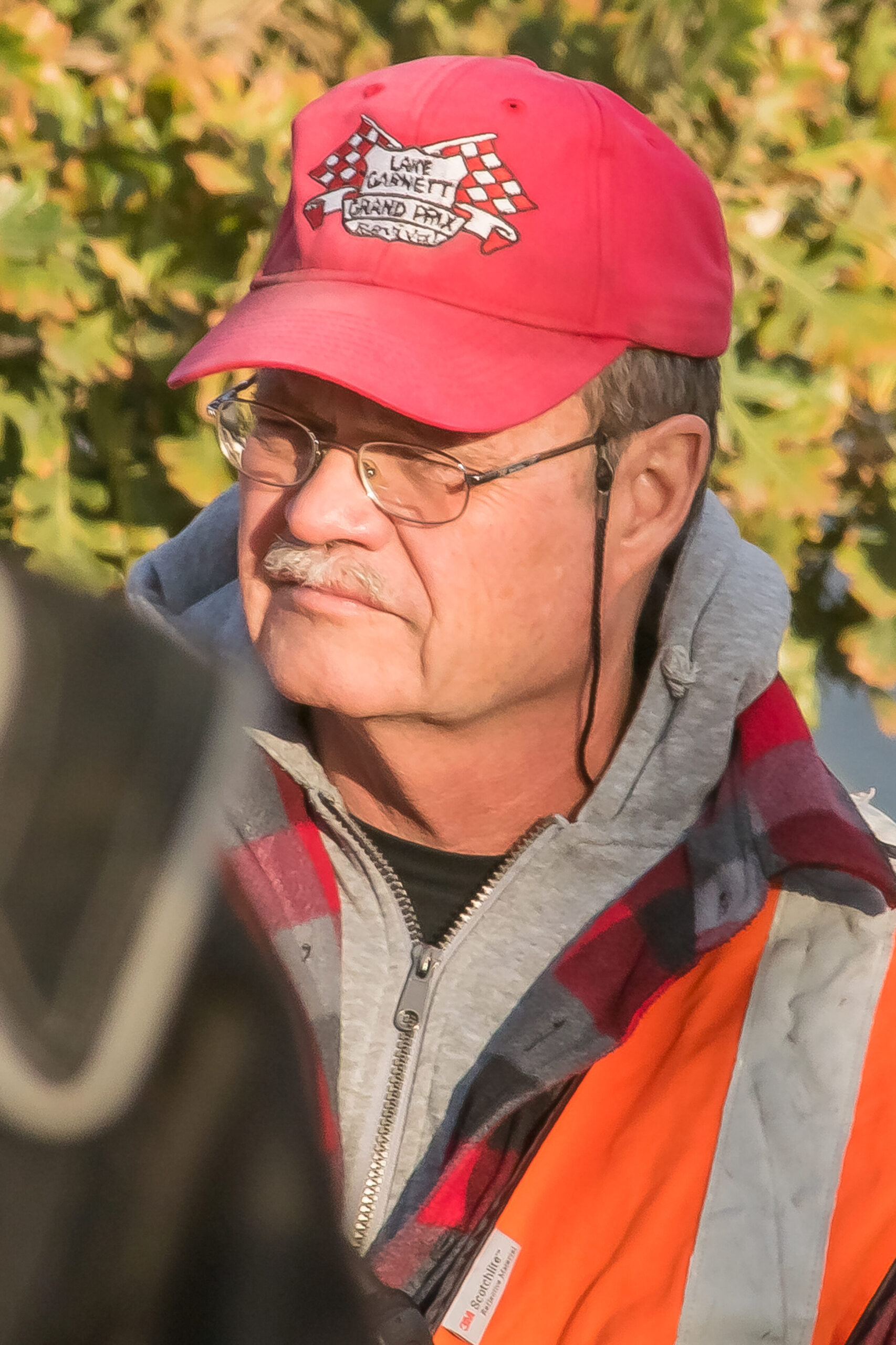
Denny designed and maintained the registration system from the ground up. The forms, the process, the tracking, the wristbands – all of it built and managed by a man who understood that registration is the first impression every participant gets of an event. It was a phenomenal piece of work. Registration forms were mailed to Denny’s home in Olathe, the quiet operational hub of an organization that had no office and no staff.
Mick Mithelavage pounded the pavement – calling, following up, and refusing to take no for an answer – until the sponsorships came in. Dan McConnell brought WD-40 and Lucas Oil to the table through his own relationships. O’Reilly Auto Parts came on board as a major sponsor alongside other local Garnett businesses who embraced the event and what it meant for their community. Together they raised thousands of dollars that went directly back into making the event better. The sponsorship tiers were named in racing language: Season Champion, Points Leader, Checkered Flag, Crew Chief, Crew Member.
Darren secured the domain lggpr.org early and set up individual email addresses for every committee member. Posters were printed and placed in local dealerships, O’Reilly stores, and businesses across the region. An event handout was pulled together, drawing from the original race programs of the late 1960s and early 1970s – giving participants something to hold that connected them directly to the history they were about to be part of. Darren also designed the T-shirt artwork himself – not his finest work by his own reflection, but it got done and people wore them proudly.
Printed directional signs were made and placed across multiple routes leading into Garnett, guiding participants to the track from two different approaches. They thought of everything. And still got a two-mile traffic jam on the morning of the event.
Many others, such as Ryan Fields, joined on the day to help with the event. The citizens of Garnett played their part throughout. Local volunteers came out to help manage the gates and the grounds, and the City of Garnett sanctioned and supported the event from the beginning. Without that community welcome, none of it happens.